What we’re raising
We’re raising $750,000 to build Cairnul: agentic fundraising compliance for early rounds from $25k to $25 million, for founders raising their first round or their fifth. Every SAFE, advisor agreement, Form D, and state filing a round triggers, in one Workspace from launch.
Our first customer is us. This round runs through Cairnul as we build it. When you invest, you become a Cairnul Investor, verified accredited and signing a SAFE.
The paperwork is mandatory, and nobody built for it
The moment the first check clears, a founder becomes a securities issuer. If you raise under Reg D, a federal Form D is due 15 days after your first sale. Then come state notice filings in most states where you sell, each with its own form, fee, and deadline, and names like 25102.1(d) that nobody warned you about. None of it was built for founders. So they run the round on a Google Doc, a group chat, and a handshake, and it works right up until it doesn’t.
Even that understates it. Many venture rounds never file a Form D at all, and the SEC publishes its own caveat about undercounting. And it doesn’t stop at the first round: from a $25k SAFE to a $25 million round, the same documents and filings come due, and one Workspace carries the founder through all of it.
Cairnul estimates a $120M+ yearly market: 55,346 US angel-funded businesses, at current pricing with two-year Workspaces. Within it is a $41M serviceable wedge: Founders, Counsel and Advisors on 10,215 early rounds a year (Founders $25.5M, Advisors $10.3M, Counsel $4.8M; Investors are free). Our target is $20M, about half the wedge and under 20% of the market. These are estimates and a target, not projections of Cairnul’s results.
The rails finally exist. The tool doesn’t.
Four things changed. SAFEs became the default: most US pre-priced rounds now close on one, almost all on the YC post-money standard. State filing went electronic: multi-state notice filing runs through NASAA’s electronic depository now, and states like New York moved off paper in 2020. Agentic AI crossed from answering to doing: agents can now watch a raise, read every document, and have the filing drafted before the deadline lands, work that used to mean billable hours with a securities lawyer. And the founder economy is compounding: incorporation, banking, and AI tooling take a weekend, not a law firm, so every new company is an early round waiting to happen.
We’re targeting a December 1, 2026 launch, and 22 people are already on the waitlist: Founders, Advisors, Investors and Counsel.
Point a Cairnul Agent at the part everyone else leaves to a lawyer
Cairnul is built around agents that do the work, not a chatbot bolted onto a form. At launch, Cairnul Agents will read a founder’s documents, pre-fill drafts of their Form D and state notice filings, track every deadline, send reminders, route documents for signing, and store the executed copies in the Workspace. Cairnul does not file Form D or state notices for you. You review, sign, and submit them yourself. Cairnul gets everything ready and keeps watch.
At launch we’ll cover Delaware corporations with investors in California, Texas, and New York, plus every state that requires no notice filing. Anywhere else gets clear guidance and a counsel referral.
The hard part of an early round is the compliance nobody sees coming. That’s the part we’re building first.
Everyone else keeps the record. We run the round.
Three things decide whether an early round gets run correctly: a tool that runs the round rather than recording it afterward, the filings that round triggers, and a price the round can carry. Everything a founder is handed today drops one of them.
The part that is hard to copy is not the SAFE. A cap-table tool can ship a SAFE template in a quarter. What takes years is the verified compliance library the Agents will draft from, and the discipline of declining on an entry that is unverified or stale instead of guessing.
Then it compounds. We land at early rounds because that is where the pain is sharpest and the field is thinnest, and the Workspace does not churn when that round closes: the same Workspace carries the founder from the first SAFE to the $25 million round that follows, and into their next company. Every Investor and Advisor they bring becomes a Cairnul account, many of them founders themselves. Three paying audiences and one built-in loop: every Investor and Advisor a founder invites joins Cairnul too.
We charge for software, never for the raise. No transaction fees, no carry, no percentage of what gets raised. Investors are free.
What the raise buys
This round funds the next 18 months across four lines tied to milestones (the compliance library, marketing, engineering, and legal), with nine hires.
Compliance library
Expand state by state in order of investor density, and deepen the forms, rules, and deadlines the agents draft from. This is the part that compounds. Over time, SOC 2, so our security posture matches what we ask founders to trust us with.
Marketing
Getting Cairnul in front of founders at the moment their early rounds start, first raise or fifth: scaling the community that is already running, paid acquisition across Founders, Investors, Advisors and Counsel, and the partnerships that bring founders in at volume: coworking spaces, accelerators, law firms and VC platform teams. Four hires: a sales development representative, a partnership manager, a customer success manager and a content manager.
Engineering
Expand the Workspace and improve the agents. Four hires: a technical product manager, a DevOps engineer, a data engineer and a fullstack engineer.
Legal
Copyright, IP, document creation, contracts, and the rest of what the product needs. One hire: a legal research analyst.
Who’s building Cairnul
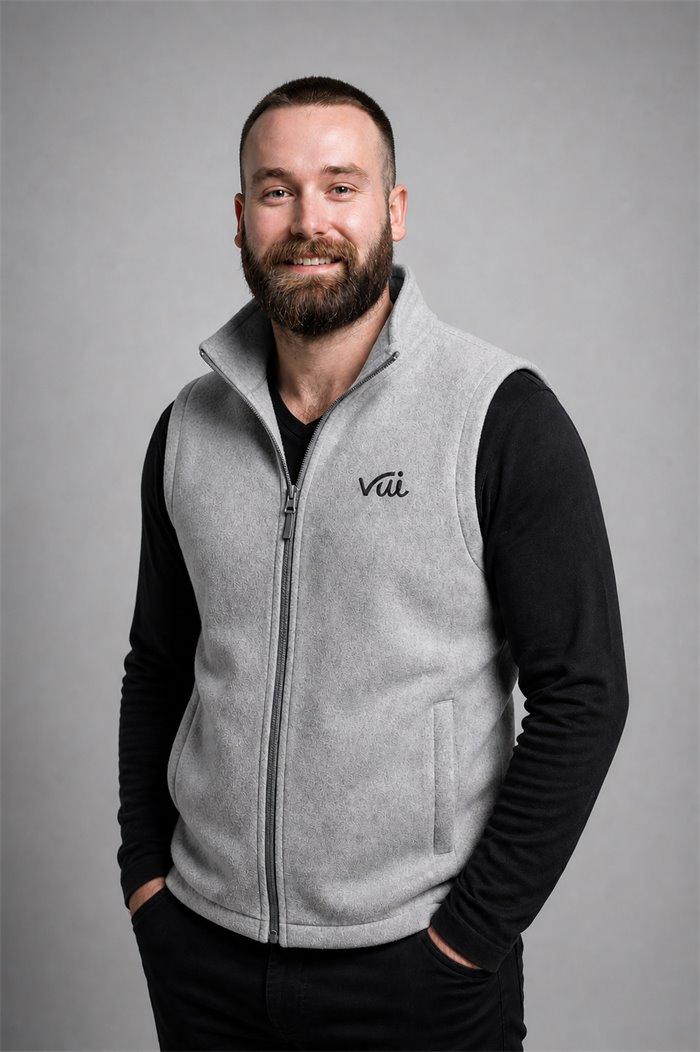
I’m Grady, and I’ve spent the last several years on the founder’s side of exactly this problem. Since 2020 I’ve worked with idea-stage founders up close: first running a development agency that built their products, then a talent agency that builds engineering teams for pre-seed through Series A. I kept ending up in the same seat, walking founders through their raises. Which template to use. What their lawyer actually needed to see. Which filing was due, and when. The advisor equity nobody wrote down.
Cairnul serves four user types, and I’ve sat in three of those seats. As an Advisor I’ve signed FAST agreements and watched my own vesting go untracked, and as an Investor I’ve written SAFE checks against a PDF.
I ran that process by hand, round after round, and watched where it broke: the missed Form D nobody caught until a later investor’s lawyer found it, the handshake advisor deal that turned into a cap-table fight two years on, the sharp founder who felt like an amateur the moment they asked someone who believed in them for a check.
Cairnul is that process, built into software. It’s the tool I wish I’d had every one of those times.
Six of us are full time: two software engineers, two digital marketers, a financial operations manager serving as CFO, and me. Advisors are being added now, a securities lawyer and a VC platform manager, joining on FASTs, the advisor agreement Cairnul is built around. Cairnul has been founder-funded to date.
How investing works
Five steps. Here’s how investing in this round works.
A small table
A $750,000 round at a $50,000 minimum is at most fifteen seats. Verified investors are taken in the order they clear, and when the round is full it closes.
The round is open now under Rule 506(c), accepting verified accredited investors on a rolling basis. Cairnul plans to launch on December 1, 2026; launch timing is an estimate and may change. We’re targeting a December 31, 2026 close, and we may close earlier or extend.
The backers we’re looking for
We’re honest about being early. So instead of a logo wall we don’t have yet, here’s who we’re hoping hears about this: operators and founders who have run their own early rounds and remember exactly how it felt; angels and pre-seed funds who back fintech, legal-tech and developer tools, and who write checks before the logos show up; people close to founders running early rounds, first-time and repeat alike, meaning accelerators, founder communities, and startup or securities counsel who see this problem every week; and backers who bring more than a check, whether that’s an introduction, a hard question, or a door worth opening. Cairnul pays no one to introduce investors.
If you back tools for the people actually building American companies from the first check, we’d like to talk. The offering is open only to verified accredited investors.
Disclosures. This page summarizes an offering of SAFEs by Cairnul, Inc. Cairnul is relying solely on Rule 506(c) of Regulation D for this offering. Sales are made only to verified accredited investors and only through the definitive offering documents, which control. The securities are not registered under the Securities Act or any state law, have not been approved or disapproved by the SEC or any state regulator, are restricted and illiquid, and have no public market. No regulator has passed on the merits or accuracy of this page. Investing in an early-stage company is speculative and you may lose your entire investment. The product has not launched, the company depends on its founder, and a SAFE carries no interest or maturity and may never convert. Statements about launch timing, market size and targets are forward-looking estimates, not guarantees. Market figures: UNH Center for Venture Research via SEC Office of the Advocate for Small Business Capital Formation (FY2025); NVCA 2026 Yearbook, data by PitchBook; current Cairnul pricing. Cairnul, Inc., a Delaware corporation registered to transact business in Texas, 501 Brazos Street, 3107, Austin, TX 78701.